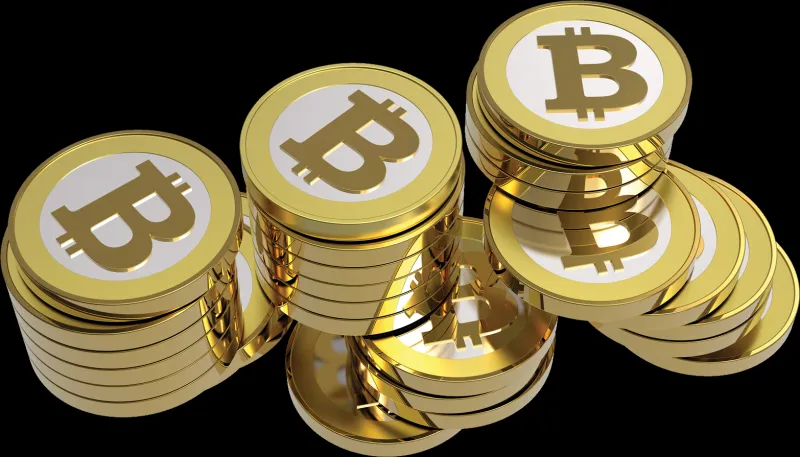
Planting Digital Roots: How American Families Are Using Bitcoin to Build Wealth That Lasts Generations
Photo: family looking at sunset over open land with digital overlay concept, via i.pinimg.com
There's a certain romance to the idea of the American homesteader — a family loading up a wagon, staking a claim on a patch of untamed land, and building something that would outlast them. It was risky, unglamorous work. But for those who committed to it, the payoff wasn't just survival. It was legacy.
Fast forward to today, and a new kind of frontier spirit is taking hold — except the land being claimed isn't measured in acres. It's measured in satoshis.
Across the country, a quiet but growing movement of Americans is treating Bitcoin not as a speculative lottery ticket, but as the foundation of a long-term wealth strategy — one that deliberately sidesteps the traditional financial system. They're not day traders chasing price spikes. They're homesteaders.
The Old Grid and Why Some Families Are Leaving It
For most of the 20th century, building generational wealth followed a pretty familiar script: get a stable job, open a savings account, buy a house, invest in a 401(k), and hope the market cooperates. It worked reasonably well for a while. But that script has some serious plot holes these days.
Inflation has quietly eroded the purchasing power of savings accounts for decades. Housing affordability has become a genuine crisis in many parts of the country. And the stock market, while historically reliable over long periods, is deeply intertwined with institutional systems that not everyone trusts — or has equal access to.
For a growing number of families, Bitcoin represents something different: a way to store and grow value that doesn't require a bank's permission, doesn't get diluted by money printing, and can be transferred to the next generation with nothing more than a string of words written on a piece of paper.
That last part is worth sitting with. The idea that you could hand your child — or your grandchild — meaningful financial resources without lawyers, probate courts, or financial intermediaries is genuinely new in human history. And it maps surprisingly well onto the old homesteading ideal.
Digital Sovereignty as a Modern Frontier Value
The philosophical parallel between claiming land and claiming digital sovereignty isn't just poetic — it's functional. When a family takes Bitcoin off an exchange and into a self-custody wallet, they're doing something structurally similar to filing a land claim. They're saying: this is ours, and no institution can take it from us.
That's a powerful statement in an era when bank accounts can be frozen, assets can be seized, and financial access can be revoked for reasons that aren't always transparent or fair.
Mark and Teresa, a couple in rural Tennessee who asked that their last name not be used, started accumulating Bitcoin in 2019 after a frustrating experience with a regional bank that froze their small business account during a dispute. "We realized we didn't actually own our money," Teresa said. "We just had permission to use it."
They've since moved a significant portion of their savings into Bitcoin held in cold storage, with a documented inheritance plan that includes a hardware wallet and a sealed letter with recovery instructions stored in a fireproof safe. Their adult daughter knows the plan. "We're not rich," Mark said. "But we're building something that can't be taken from us. That feels like the most American thing we've ever done."
The Mechanics of Multi-Generational Bitcoin Planning
Of course, the romantic vision of handing down a hardware wallet runs into some practical realities. Bitcoin inheritance planning is still a relatively young field, and getting it wrong can mean funds are lost forever.
A few principles have emerged among families who are serious about this approach:
Self-custody is non-negotiable. Bitcoin sitting on an exchange isn't really yours — it's an IOU. For true generational transfer, families need to control their own private keys using hardware wallets or other cold storage solutions.
Documentation is everything. Unlike a bank account, Bitcoin has no customer service line. Clear, secure documentation of wallet addresses, recovery seed phrases, and instructions for heirs is absolutely critical. Many families work with estate attorneys who have cryptocurrency experience to formalize this.
Education is part of the inheritance. Several families interviewed for this piece emphasized that passing down Bitcoin without passing down knowledge is a recipe for disaster. Teaching younger generations how to manage a wallet, verify transactions, and avoid scams is as important as the Bitcoin itself.
Time horizon matters. Bitcoin's volatility is real, and families treating it as a generational asset generally think in decades, not months. Dollar-cost averaging — buying small, consistent amounts over time — tends to smooth out the bumps.
Is This Actually Working?
It's still early. Bitcoin as a mainstream asset class is barely a decade old, and truly multigenerational outcomes won't be visible for years. But the early signals are interesting.
Families who began accumulating Bitcoin in 2015 or 2016 are sitting on life-changing returns, even accounting for multiple brutal bear markets. The question isn't whether Bitcoin has created wealth — it clearly has. The question is whether families can hold, protect, and transfer that wealth effectively across generations.
The homesteaders of the 1800s faced similar uncertainty. Not every claim worked out. Some families lost everything to drought, conflict, or poor planning. But the ones who succeeded built something durable — and their descendants are still benefiting today.
The digital frontier is younger and messier, but the underlying impulse is the same: find something real, claim it, and build on it.
Staking Your Claim in the Digital Age
If there's a throughline in the stories of families embracing Bitcoin as a generational strategy, it's this: they stopped waiting for the traditional system to work for them and started building something outside of it. Not in anger, necessarily — but with clear eyes about what the old grid can and can't offer.
That's a deeply American instinct. The frontier has always been about choosing the harder, more uncertain path because the potential payoff — real ownership, real autonomy, real legacy — is worth it.
The land of Bitcoin is still being settled. The families who get serious about it now, who learn the tools, do the planning, and think in generations rather than quarters, might just be the homesteaders of the digital age.
And a hundred years from now, their grandkids might look back and think: they got there first.